
NCAJ URGES SCALING UP OF EFFORTS TO ENSURE EFFICIENT ADMINISTRATION OF JUSTICE
By Nicholas Kigondu
The National Council on the Administration of Justice (NCAJ) has intensified efforts to ensure coordinated approach in addressing challenges facing access and administration of Justice in the country amid changing crime trends.
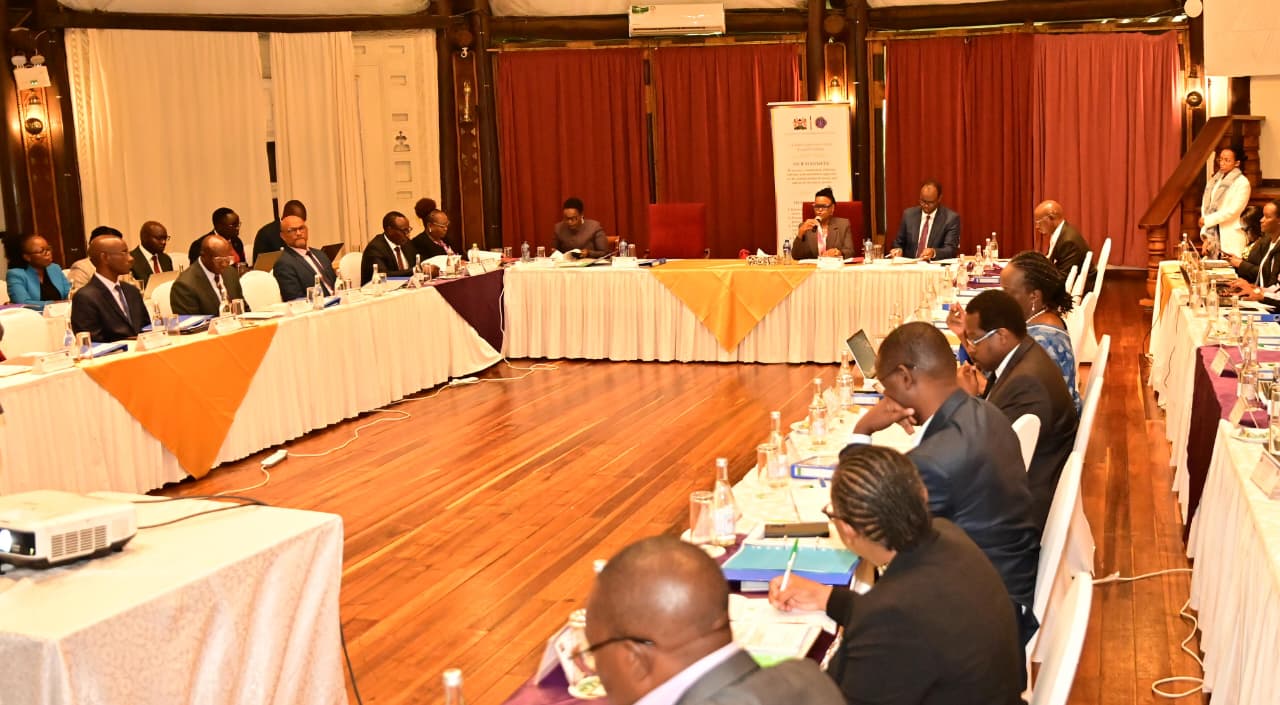
Speaking in Nairobi at the 37th Council meeting, NCAJ Chairperson Chief Justice Martha Koome said there was need to scale up both individual and collective efforts to ensure efficient administration of justice that is more people centered.
Addressing members of the council, drawn from a broad coalition of state and non-state actors aimed at reforming the justice system, Koome observed that while the country has some of the most progressive laws, they appear to have failed to fully deter some crimes including sexual related offences.
Addressing the forum, Attorney General Dorcas Oduor said the state law office has already constituted an inter-ministerial committee to look at all obsolete laws and those that have been declared unconstitutional to ensure that the laws are responsive.
While making a presentation on the challenges of sexual offences in Kenya, Correctional Services Principal Secretary Dr. Salome Beacco informed members of available data within the correctional system indicating high prevalence of sexual related cases coupled with significant barriers to justice for both victims and offenders.
She highlighted defilement as one of the offences that continues to dominate across both custody and community systems, while rape and gang-related offences continue to show increasing complexity.
She said the obtaining situation continues to pose a major justice and public safety challenge while intensifying pressure on rehabilitation programmes and reintegration efforts.
“Management of sexual offenders directly affects public safety, recidivism reduction, correctional management, victim protection, reintegration outcomes as well as the achievement of correctional reforms under BETA Agenda” She observed.
According to the PS, sustained investment in prevention, rehabilitation, reintegration and inter-agency coordination remains critical to reducing recidivism and strengthening community safety.
NCAJ is working on a host of reform proposals aimed at eliminating institutional inefficiencies and bottlenecks that affect the effective administration of justice.
Among the efforts include the development of standard operating procedures for traffic management that seek to operationalize Section 117 and 117 A of the Traffic Act and the Traffic (Minor Offences) Rules, 2016.